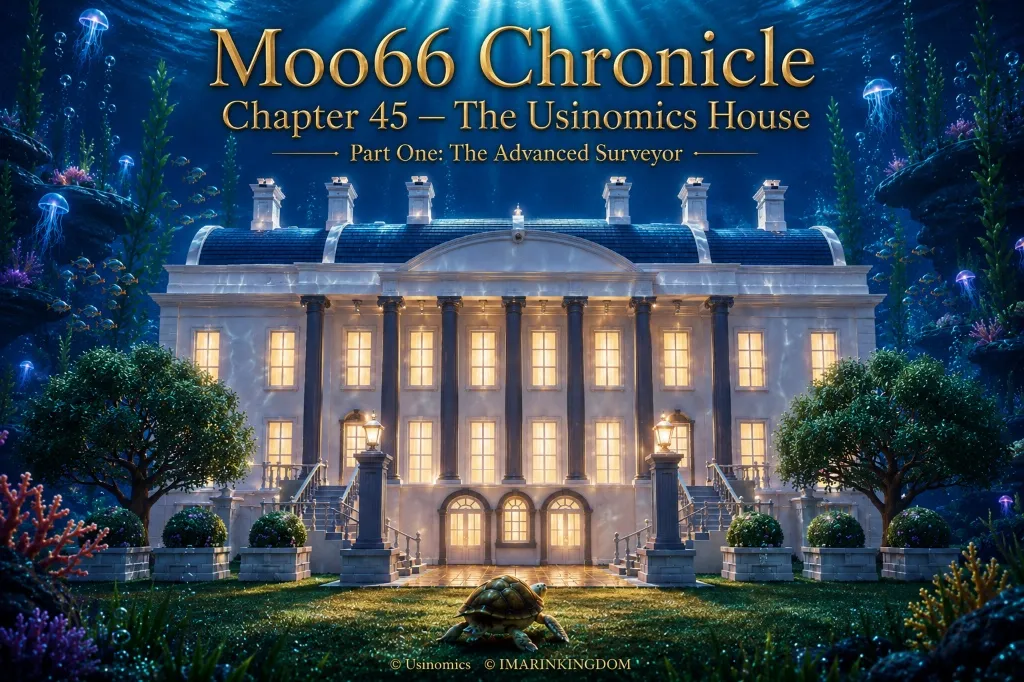
Part One: The Advanced Surveyor

As the marine survey progressed, every completed assignment brought Usinomics closer to a higher rank.

The work was repetitive by design.

Survey the seafloor.

Collect the required materials.

Remove contamination.

Return to the surface.

Recover.

Then repeat the entire process until the system finally decided that the participant had learned enough to be trusted with more difficult work.

No resident could become an advanced marine surveyor immediately. There were no shortcuts, no private recommendations, and no mysterious envelope containing a certificate.
The qualification had to be earned by participating in the event again and again—sometimes so many times that Usinomics could no longer remember which mission had been his first.

Eventually, however, the notification appeared.
ADVANCED MARINE SURVEYOR STATUS ACQUIRED
Usinomics stared at the message.

Then he stared at it again.

He had expected fireworks.

There were none.

He had expected ceremonial music.

There was none.

A small notification icon blinked once and disappeared.

That was all.

Still, the qualification changed everything.

Advanced surveyors were permitted to purchase plots of land within the newly discovered underwater territory. The first plot cost only one hundred acorns. The next cost eight hundred. After that, the price rose to one thousand.
The system had a simple philosophy:

The more land a resident wanted, the more suspiciously expensive the land became.

Fortunately, there were no annual property taxes.

There was no resident tax.

There were no utility bills, construction fees, labor costs, permit fees, inspection fees, maintenance charges, or administrative processing fees.

Usinomics reviewed the list carefully.

Then he reviewed it a second time, just in case the system had hidden something unpleasant near the bottom.

It had not.

he said.
The statement was especially impressive because he was saying it at the bottom of the sea.

Life underwater was unexpectedly comfortable. Residents could breathe without special equipment, and the buoyancy reduced the strain on their bodies. Movement felt light and effortless, as though gravity had temporarily forgotten its responsibilities.

Walking was optional.

Floating was encouraged.

Falling was difficult.

Usinomics considered this an excellent improvement to civilization.

The only serious danger was polluted seawater. Dark clusters of contamination occasionally appeared throughout the marine zone, drifting like mold-covered spheres suspended in the current. They had to be removed before they spread.

Fortunately, the contamination could be cleansed.

Residents could return to the surface for decontamination, or they could approach the enormous flower-shaped corals scattered across the seabed. The corals purified anything that came near them with silent efficiency.
They asked for no payment.

They required no appointment.

They did not request identification.

They simply cleaned everything.

Usinomics regarded them as the most reliable public-service facilities he had ever encountered.

After confirming his new rank, he immediately contacted Leemai.

The connection opened, and Leemai appeared on the screen.
Usinomics said, unable to hide his excitement,
Leemai smiled.

she continued,
Usinomics nodded. He had already experienced that effect.

The underwater environment regulated body temperature surprisingly well. Instead of remaining beneath the sun and attempting to cool down with food, shade, or increasingly desperate amounts of water, a resident could simply enter the sea.

The temperature dropped almost immediately.
It was one of the rare situations in which jumping into the ocean counted as medical common sense.
Leemai explained.
Usinomics imagined sitting beside the ocean and eating six or seven salads in rapid succession.
Leemai said.
Usinomics considered this.
Leemai’s expression became thoughtful.
Usinomics nodded solemnly.

They had reached the painful point where both of them understood that the purchase had been inefficient, but neither wanted to admit that it had been a mistake.

Leemai smiled again.
Usinomics agreed.

The sea required no batteries.

It required no maintenance plan.

It had no operating hours.

It did, however, contain fish large enough to make him reconsider swimming too far from shore.

After the conversation ended, Usinomics returned to the marine survey.

He passed through the underwater gate, moved across the seafloor, and completed the remaining objectives. He gathered resources, cleared contaminated zones, and followed schools of glowing fish through enormous stone formations.

The seafloor stretched before him in shades of blue, green, and violet. Large corals bloomed like flowers in an impossible garden. Small fish moved through the water in coordinated silver lines, changing direction as though they were responding to an invisible conductor.
Farther away, a sea turtle drifted through the current with the calm confidence of a resident who had never received a deadline.

Usinomics watched it disappear behind a column of rock.

Then another notification appeared.
MARINE SURVEY COMPLETED
DEEP-SEA GATE INSTALLATION AVAILABLE
Back at Moo66, a deep-sea gate was installed.

The structure connected the surface settlement directly to the underwater land owned by Usinomics. Once activated, it allowed him to travel instantly from Moo66 to the deep-sea territory.

There was no boat ride.

No submarine.

No check-in counter.

No luggage limit.

One moment, he could be standing beside the diner.

The next, he could be floating above the seabed.

Usinomics tested the gate several times.

Surface.

Deep sea.

Surface.

Deep sea.

After the fifth trip, he decided that the gate was reliable.

More importantly, it offered a practical solution whenever his body became overheated. Instead of searching for shade or waiting for the temperature to drop, he could simply travel to the underwater site and cool down in seconds.
It was a private climate-control system disguised as an interdimensional gateway.

Now that he could reach the marine territory freely, Usinomics turned his attention to construction.

He purchased one plot.

It was too small.

He purchased another.

Still too small.

He continued until six plots had been connected into a single building site.

The cost increased each time, exactly as the system had promised.

Usinomics watched his acorn balance fall with the calm expression of someone pretending not to notice.
A single plot could support only a modest structure—something closer to a shed than a major facility.

But Usinomics did not want a shed.

He wanted an embassy.

Not a small office with one desk, one plant, and a sign near the entrance.

He wanted a monumental building.

A formal building.

A building with symmetry, columns, staircases, and enough windows to make cleaning them a permanent occupation.

He wanted something inspired by an American embassy, with the commanding presence of a grand civic institution and the recognizable dignity of the White House.
The building would not actually belong to a government.

It would not contain ambassadors.

It would have no diplomatic authority.

It would not issue visas.

It would not host official negotiations.

At that point, it did not even have electricity.

But none of those details prevented it from looking important.

Usinomics placed a small paper model beside the construction site.

He had designed it by hand.

The model was simple, white, and slightly uneven.

One side leaned.

The roof had been repaired with tape.
Nevertheless, he treated it as a professional architectural reference.
he said,
The lower level had to be accessible to smaller residents. Originally, Usinomics planned three doors across the front.

One on the left.

One in the center.

One on the right.

He studied the design.

Three doors created a problem.

Someone might arrive and wonder which door to choose.

Worse, the arrangement resembled the Monty Hall problem.

Usinomics did not want guests standing outside the building while considering probability theory.
He removed the center door and replaced it with a window.

Two doors were enough.

A guest could choose left or right without accidentally entering a mathematical experiment.

On both sides of the building, he constructed balanced staircases inspired by the formal entrances of American government buildings. The stairs rose evenly toward the upper level, creating a strong sense of symmetry.

At least from the front.

The rear of the building was considerably simpler.

The front suggested diplomacy.

The back suggested a large white box.

Usinomics accepted the contrast.
A curved approach would have been elegant, but the basic building system made arches difficult. Instead, he used a zigzag arrangement, carefully placing foundations and stairways until the entrance looked intentional.

It was not exactly what he had drawn.

It was not exactly what he had imagined.

But it was no longer obviously accidental.

Long columns rose from the lower level to the upper structure, recalling the monumental proportions of the Parthenon. Behind them, the main body of the building remained rectangular and practical.

A tofu-shaped building, Usinomics thought.

A dignified tofu-shaped building.

Small windows were added to the lowest level, creating compact spaces that could eventually serve as offices, service rooms, or perhaps private chambers for very short diplomats.

Above them, Usinomics constructed the middle level.

It followed the same symmetrical principle.
Everything on the left needed a counterpart on the right.

If one side had a staircase, the other side received a staircase.

If one side had a window, the other side received a window.

If one side had a problem, the other side usually received the same problem for balance.

The upper level sat above the middle floor and could be reached by another set of stairs. Because the building was limited to six connected plots, every level became slightly narrower as it rose.

The structure began wide and formal at the bottom, then gradually tightened toward the top.

It looked less like a conventional embassy and more like an architectural layer cake.

A very serious layer cake.

For the windows, Usinomics selected metal-framed designs that resembled the strong, orderly window structures used in American civic architecture. They were not exact copies, but they gave the façade the proper rhythm.
Tall window.

Column.

Tall window.

Column.

Repeat until the building looked authoritative.

The roof had been more difficult.

Usinomics had noticed that grand American buildings often included small upper windows or dormer spaces. He wanted to add another compact room beneath the roof, perhaps a private office or miniature ambassador’s suite.

Unfortunately, the building had reached the construction height limit.
The system refused to allow another room.

Usinomics tried again.

The system refused again.

He changed the angle.

It still refused.

Eventually, he installed the roof without the room.

The result was unusual.

There was a roof.

There was space beneath the roof.

But there was no usable room.

It was architecture with an empty thought inside it.

The middle level featured a tall open interior that resembled a formal entrance lobby. Two smaller rooms were added on either side, but they were narrow enough to resemble powder rooms.

The upper level was even smaller, supported by the middle structure beneath it.
It felt almost like a loft.

Usinomics stepped back and looked at the entire building.

The lower structure supported the lower level.

The middle structure supported the upper level.

The upper level supported the roof.

Every part of the building seemed to be reusing the floor beneath it.
 he said.

The building contained no furniture.

No lighting.

No desks.

No chairs.

No paintings.

No flags.

No carpets.

No curtains.

No visible purpose.

It was, however, impressively white.

The floor plan could be summarized as follows:

The first floor consisted of the low section and the lower section.

The second floor consisted of the middle section and the upper section.
The rooftop served as a watch platform.

Usinomics also installed eight chimneys.

There were no fireplaces yet.

The chimneys were therefore decorative, symbolic, or possibly optimistic.

From a distance, they made the building look established.

From inside, they made no difference at all.

The completed exterior was dramatically different from Moo66.

Moo66 was warm, crowded, practical, and full of everyday life.
The new structure was formal, spacious, pale, and slightly intimidating.

For the exterior walls, Usinomics kept the original default finish. He added no flowers. Instead, he planted only trees and carefully shaped shrubs around the building.

The landscape became clean and restrained.

White walls.

Green trees.

Blue water.

No decorative flowerbeds.

No colorful banners.

No cheerful café signs.

The building looked as though it expected every visitor to arrive with an appointment.
When construction finally ended, Usinomics remained outside for a long time.

He floated slowly around the structure, studying it from different angles and taking photographs.

From below, the columns appeared enormous.

From the front, the façade looked surprisingly official.

From the side, the building revealed how many layers had been forced onto the limited land.

From the back, it remained a white box.

Usinomics took fewer photographs from the back.

He was still dressed in his ordinary clothes. He had not prepared a formal outfit for the occasion.

There was no suit.

No ceremonial coat.

No diplomatic uniform.
He wore his usual cap, glasses, jacket, shorts, and boots.

In the photographs, the grand white building rose behind him while he floated through the seawater like an action hero launching into the sky.

The contrast was perfect.

The building looked ready for an international summit.

Usinomics looked ready to go fishing.

He took another picture.

Then another.

In one photograph, he raised one hand toward the camera.

In another, he floated directly in front of the main entrance.

For a moment, he imagined dramatic orchestral music.
A hero rising.

A nation watching.

A new era beginning.

Then he drifted sideways because of the current.

The heroic moment ended.

Nearby, something tugged at one of the fishing lines he had left in the water.

Usinomics pulled it in.

A turtle emerged.

It was a two-star turtle.

He examined it carefully.

The turtle examined him with considerably less interest.

Because it was a turtle, Usinomics had no intention of eating it.

He could not cook it.

He did not want to cook it.

He released it into his newly purchased marine territory.
The turtle moved its flippers and slowly swam away.

It passed between the columns, crossed the front of the building, and disappeared into the blue distance.

Usinomics watched it go.

Perhaps, he thought, this was how life would circulate through the territory.

Fish caught during surveys did not always have to become meals.

They did not always have to become ingredients.

Some could be released into the private marine zone, where they would continue swimming and gradually transform the empty seafloor into a living habitat.

It was a peaceful idea.

A sustainable idea.

A compassionate idea.

Usinomics folded his arms and nodded.
He would probably still fry some of the fish.

But not all of them.

That counted as progress.
To be continued in Part Two: The Embassy Without an Embassy
いいねして作者を応援しましょう!

スポットライトでみんなに広めよう!
「スポットライト機能」は好きな小説をたくさんの読者に広めたり、作家に応援の気持ちを伝えられる機能です!
- 1
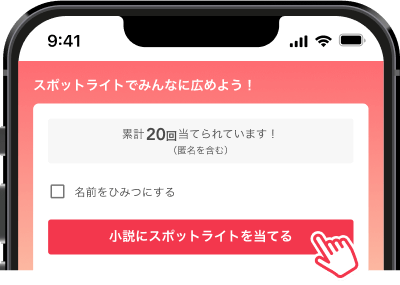
小説にスポットライトを当てる
「小説にスポットライトを当てる」ボタンを押そう!
あなたの好きな小説や、自分が書いた小説にもスポットライトを当てられます。
- 60分につき3回までスポットライトを当てることができます。
- 「名前をひみつにする」にチェックを入れて当てると、スポットライトユーザー一覧に名前が掲載されません。
- 2
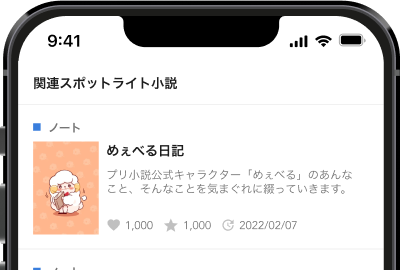
スポットライト小説枠に掲載される
スポットライトを当てた小説は、以下の場所にあるスポットライト小説枠に掲載されます!
- 検索ポータルページ
- 小説詳細ページ下部
- チャプターページ下部
- スポットライト小説枠に掲載される小説は、ユーザーごとの好みに合わせて表示されます。
- 3
たくさんの人に読んでもらえる
好きな小説や自分が書いた小説にスポットライトを当てて、たくさんの人に読んでもらおう。
応援の気持ちを伝える手段としても使えます!
スポットライトユーザーランキング

- ファンタジー

歌い手異世界クラン
🎲→Brave 🌟→へっぽこ勇者のRPG 🎼→僕だけの声を を参考にして書いてます! ちょいグロ・ちょい曲パロ・雑設定・アイコンメーカー使用・シェアハウス・異世界・オリキャラ(頻度低) 苦手な人はブラウザバック!! あらすじ ステムエンザング王国で活動するとある3つの冒険者パーティー 守護者パーティー:🎲 探索者パーティー:🌟 開拓者パーティー:🎼 (▷◀は途中から出てくる予定) これらの冒険者たちが所属するクラン、vOsgの成長を描く異世界ファンタジー。
7601162024/07/29 - ノンジャンル

イカゲーム短編集
この場所は、愛ですらも踏み躙る。 こんな場所で、君は愛を守れるか。 -Attenzione- ・書きたくなったら更新 ・名前カタカナ推奨 ・少々暴力的なのでR18タグ(※題材がデスゲームなのでしょうがない) ・感想、要望はコメントに
1081722025/07/01 - 恋愛

『にせもの』
この世界は『にせもの』で、何一つとして信じるに値するものなどない。 中学二年生のスズは良い人であり続けながら、そう感じて生きてきた。 それでもこの世界を生きるためには『仮面』が必要で、ときには本意ではない不利益を飲み込みながら、求められた役割を演じ続けていた。 そんな彼女が出会ったのは、不登校から復帰するや否やテストで学年一位を叩き出した天才であるケイと——彼が持つ『哲学』だった。 『世界は無意味だ』『仮面を着けて生きるな』と言う彼の思想は、この世界を疑い続けていたスズに『その先』を見せる光——あるいは深淵であった。 ※この物語はフィクションです ※【第一部】の作品がありますが、本作単品でもお楽しみいただけます ※表紙はGeminiにより生成
932026/07/11 - ノンジャンル

〜ただいま、おかえり〜
人気アイドルグループTravis Japanのメンバー、川島如恵留は突如体調を崩し、活動を休止せざるを得なくなった。グループとファン、そして彼自身の未来を案じる日々の中、如恵留は静養の日々を過ごす。しかし、そこには表には出せない葛藤や苦悩が潜んでいた。休止期間中、メンバーとの関係は変化し、新たな恋の芽生えや、衝突も生まれる。再びステージに立つため、そして自分自身と向き合うため、如恵留とTravis Japanのメンバーが織りなす、感動と成長の物語。彼らが乗り越える困難と、掴む未来とは?〜ただいま、おかえり〜は、アイドルの光と影、そして友情と恋を描いた、胸を締め付けるヒューマンドラマです。
2182025/08/07



コンテスト受賞作品
もっと見るmeiyoオーディオドラマ&主題歌 原案コラボコンテスト


編集部コメント
引きこもりのおじさんと真面目な女子高生という組み合わせがユニーク。コンテストテーマである「タイムカプセル」が、世代の違う二人をつなぎ、物語を進めるアイテムとして存在感を発揮しています。<br />登場人物が自分の過去と向き合い、未来に向かって成長していく過程が丁寧な構成で描かれていました。